
Sector one
Non-intrusive inspection systems
Valora Incorporated is the sole representative of Varex Imaging in Bangladesh, supplying cargo and container scanners to customs authorities, port operators and border agencies — installed, integrated and serviced by a team already in the country.
- Sole representativeThe only channel for Varex cargo security systems in Bangladesh.
- In-house sourceAll critical components manufactured by Varex.
- One-day escalationRegional hub allows rapid deployment of the service team.
Inspection is a bottleneck or a blind spot. Rarely neither.
Physical examination is thorough and slow. Opening a container ties up a bay, a crew and a customs officer for the better part of an hour, so in practice only a small percentage of consignments can be examined at all — and the selection is only as good as the risk profile behind it.
Everything else moves on the declaration alone. Misdeclaration, concealment and undervaluation survive precisely because inspection capacity is finite.
A high-energy transmission scanner changes the arithmetic. A loaded forty-foot container is imaged in the time it takes to drive through a portal, and an operator compares that image against the manifest without breaking a seal.
Dual-energy imaging separates organic material from metal by density, so a declared cargo of textiles that returns a dense metallic signature is flagged before it leaves the terminal — and a clean container is released faster than it would have been under manual selection.
Valora is the sole representative of Varex Imaging in Bangladesh
Every enquiry, tender submission, installation and service call for Varex cargo security systems in Bangladesh runs through Valora. There is no second channel to compare against and no ambiguity about who carries the manufacturer's authority into a procurement.
Varex Imaging is a US manufacturer headquartered in Salt Lake City, with more than seventy years of X-ray innovation behind it and around 2,300 people across North America, Europe and Asia. It builds the linear accelerators and detectors at the core of its own systems — and supplies those same components to other imaging manufacturers worldwide.
Varex cargo security systemsThree scanning platforms, one manufacturer
Each system solves a different inspection problem. Selection follows from what is being screened, how many units per hour, and whether the inspection point is fixed or has to move.
-
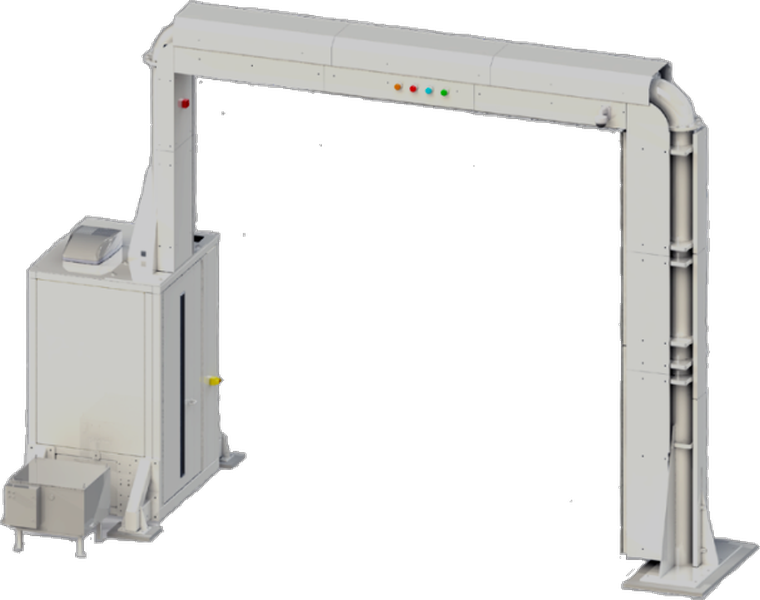
VXP-6
Portal · High energyFixed portal screening for ISO containers, cargo vehicles and palletised goods at ports, dry ports and border crossings.
- Multi-energy Varex linear accelerator
- Large tunnel; bidirectional
- Portal and gantry operating modes
- Scans the full vehicle including the cab
-
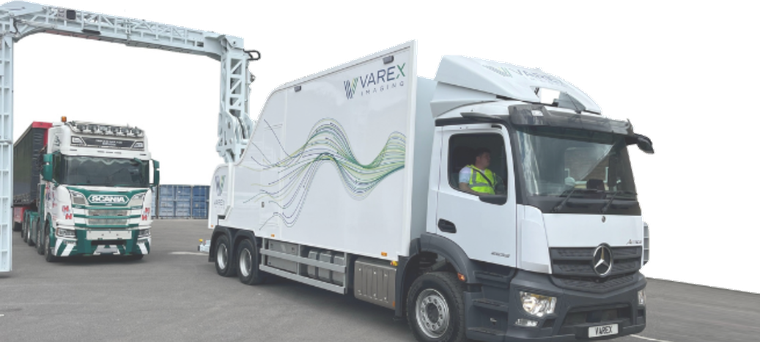
VXM-6
Mobile · High energyA complete high-energy system on a Mercedes-Benz Actros chassis, delivered road ready for deployment wherever the inspection need appears.
- 6 MeV mobile high-energy screening
- Detector boom deploys in under 9 minutes
- Drive-by and portal modes
- Up to 120 scans per hour in portal mode
-
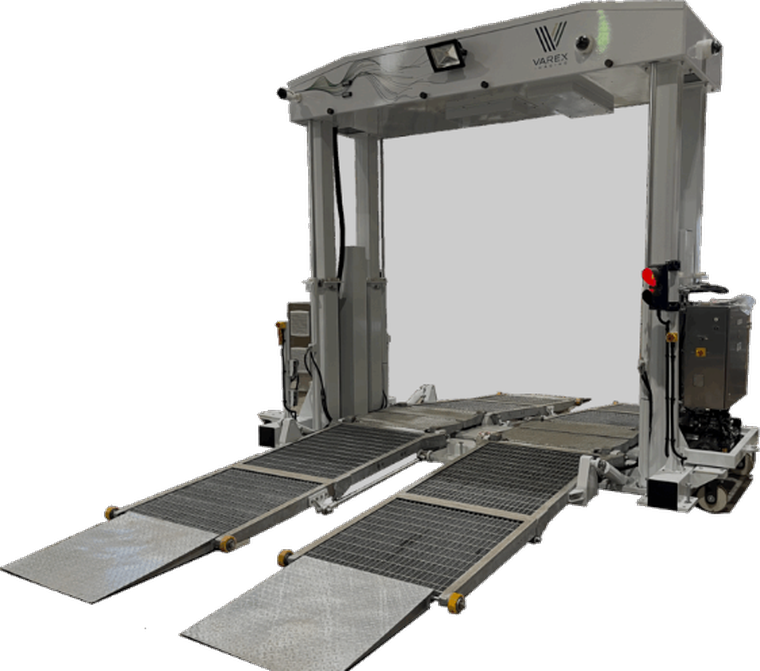
VXC-300
Relocatable · Low energyTop-down screening for cars, vans and small buses at entry points, secure complexes, hotels and border crossings.
- Top-down imaging, U-shaped detector array
- Dual energy material discrimination
- Folds into a 20 ft container for transport
- Built for high hourly throughput
Full specifications for any configuration are issued in the technical proposal following a site survey.
A scanner is a fifteen-year support relationship
The capital cost is decided once. Uptime is decided every week for the next decade and a half, which is where the differences between suppliers actually show up.
-
The source is not outsourced
Varex manufactures all the critical components in its systems, including the linear accelerator source. Several competing scanner brands buy those same components from Varex, which places supply continuity and spares at the origin of the chain rather than downstream of it.
-
Engineers already on the ground
A trained Varex service team operates in Bangladesh today, maintaining installed units at the Karnaphuli Tunnel. Support does not begin with a new hire.
-
One-day regional escalation
The regional service hub in Thailand can deploy an engineer within a day, so a fault does not turn into a week of closed lanes.
Matched to the site, not to a catalogue
Throughput target, lane geometry, available civil works and the regulatory envelope determine the configuration. We specify against a site survey rather than a brochure.
-
Fixed-site portal
Highest throughput and image quality, for permanent installation at a container terminal, land port or dedicated inspection yard. Requires prepared foundations and a shielding envelope.
-
Relocatable
Comparable imaging performance with a shortened civil works programme, for sites that may be reconfigured or where the inspection point could move as traffic patterns change.
-
Mobile
Vehicle-mounted and self-deploying, for secondary inspection, seasonal surges, remote crossings and interdiction work away from a fixed facility.
Exact model designation, energy level and throughput figures are confirmed in the technical proposal issued after a site survey.
From site survey to first scan
A prepared site installs in roughly two weeks. The programme before and after that is what determines whether the system is actually used well.
-
Site survey
Throughput target, lane geometry, power, and the radiation safety envelope agreed with the regulator.
-
Civil works
Foundations and shielding built to the approved drawing, ahead of equipment arrival.
-
Installation & commissioning
Assembly, calibration, image quality acceptance and radiation safety sign-off.
-
Training & handover
Operator and image-analysis training, spares kit, and an agreed service response standard.
An image is only useful where the decision is made
Scan images and inspection outcomes can be passed into the customs platform already in use, so a scan result attaches to the declaration rather than sitting in a separate system that officers have to be persuaded to open.
Where an agency prefers it, Valora can provide on-site operating and image-analysis support during the ramp-up period, until the in-house team is confident working unassisted.